Major infrastructure upgrades progressing to improve Milnerton Lagoon water quality
13 June 2025
Ongoing infrastructure upgrades, enhanced maintenance and improved environmental monitoring will help restore water quality in the Milnerton Lagoon and surrounding catchment areas.
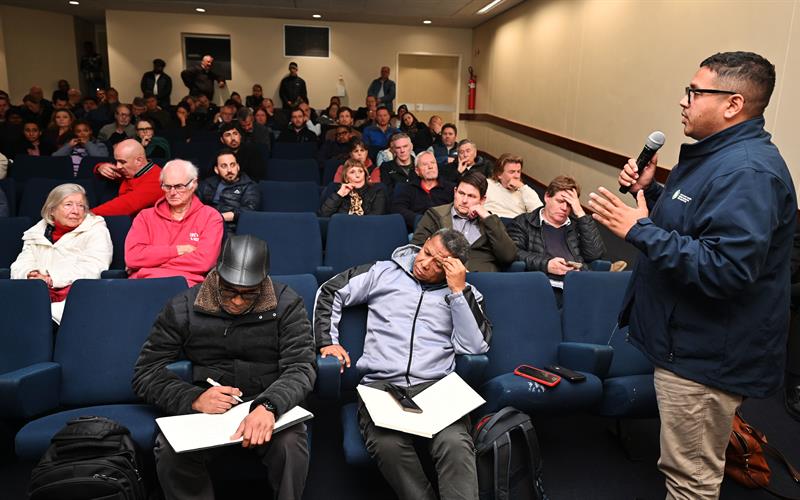
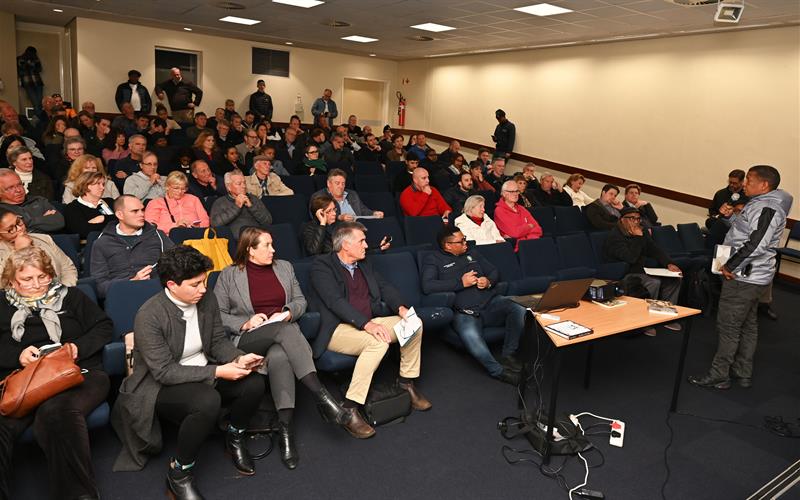
At a public update meeting held on 10 June 2025, residents were briefed on the latest progress in the City of Cape Town’s multi-pronged programme to tackle pollution in the lagoon. The programme includes extensive sewer and pump station upgrades, improvements to the Potsdam Wastewater Treatment Works (WWTW) and the establishment of a permanent air quality monitoring station in the area.
‘The City thanks residents for their continued engagement as it rolls out these comprehensive interventions. These efforts remain central to the City's broader plan to restore and preserve the ecological health of the Milnerton Lagoon and Diep River system,’ said Mayoral Committee Member for Water and Sanitation, Councillor Zahid Badroodien.
 ‘We understand the deep concern residents have about the health and environmental impacts around the Milnerton Lagoon. City Health remains committed to transparent monitoring, ongoing engagement, and ensuring that public health considerations stay front and centre as infrastructure work progresses. Every resident deserves to feel confident that their environment is safe, and we are working closely across departments to make that a reality,’ said Mayoral Committee Member for Community Services and Health, Councillor Francine Higham.
Pump station upgrades and network maintenance underway
The City is actively implementing both short- and medium-term interventions to ensure optimal functioning of the sewer system and pump stations in the region.
• Sewer network interventions: Proactive sewer cleaning and jetting is now conducted every three months, along with ongoing manhole integrity inspections and replacement of missing or damaged covers.
• Telemetry installations: All 112 reticulation pump stations in the region are now equipped with telemetry units, with 56 stations within the Potsdam catchment being closely monitored for early fault detection.
• Key pump station upgrades:
o Du Noon PS upgrades include screening reconfiguration (March 2025) with further upgrades planned for 2026, electrical system improvements (June 2025), and overflow pond reinstatement (April 2026), with a total project value of R5 million.
o Koeberg Road PS will see sand trap and screening facility upgrades completed by June 2025 (R61,2 million), with a capacity upgrade phase due by December 2028 (R137,7 million).
o Table View East PS interventions include basket screen installation (Aug 2025), two backup pumps (June 2026) two over-pumping facility points, and a full upgrade by Aug 2030 (Budget to be determined).
o Phoenix PS upgrade, including a new rising main, is underway with an estimated completion date of October 2027 and a project value of R70,6 million.
o Sanddrift East PS upgrade is set for completion in December 2027 (R46 million).
o Table View West PS upgrade is scheduled for June 2030 (R30 million).
Ongoing upgrades and operations at Potsdam WWTW
Major improvements at the Potsdam WWTW are progressing well:
• The repair of 08 Plant Primary Settling Tanks (PST) 2 and 3 has been completed, while PST 1 repairs are scheduled to finish by end June 2025.
• All aerators at the 08 Plant Reactor are now operational, improving effluent quality through reduced Chemical Oxygen Demand (COD) and ammonia levels.
• Additional chlorine dosing units have been installed to reduce E. coli concentrations in the final effluent.
• A new permanent bypass system around the ponds is currently being constructed. Once operational, this will ensure that the treated effluent is not re-contaminated by the maturation pond system.
• The new dewatering installation containing 16 belt presses is currently being commissioned in phases of eight at a time with the waste activated sludge presses occurring first.
The major Potsdam WWTW upgrade, which commenced in April 2023, is currently in the mechanical and electrical installation phase for the dewatering and ultrafiltration components. Key progress includes:
• Completion of civil works for the 08 Plant micro-screening, ultrafiltration and treated effluent distribution pump station finalised.
• Completion of the civil works for the new inlet works is making good progress.
• Near-completion of the entire new Dewatering Plant, with four Waste Activated Sludge (WAS) and four primary presses being dry-tested.
• Membrane Bioreactor (MBR) section construction remains on track, with commissioning targeted for 2027/28.
 Anticipated commissioning milestone dates:
• Ultrafiltration modules (9 UF trains and 6 microscreens): August 2025
• New Sludge Dewatering Facility: July 2025
• New Inlet Works: October 2027
• Membrane Biological Reactor (MBR) and PSTs: October 2027Modified/appealed DEADP directive
The City notes the amendment to the Modified/Appeal Directive. These changes simply align the directive with the project timeframes for infrastructure upgrades aimed at improving the Milnerton Lagoon’s environmental health. These project timelines have been communicated to the environmental authorities and public over the last two years. From the outset, the City has maintained that directive deadlines must reflect practical project timelines. The amendment now correctly does so, without extending any deadlines. These upgrades remain on track for completion in the shortest possible time, considering external dependencies such as required authorisations.
Air quality monitoring efforts expanded
As part of the City’s commitment to addressing community concerns around odour from the lagoon area, a temporary ambient air quality monitoring station has been operational at Woodbridge Island, measuring Hydrogen Sulfide (H₂S) concentrations. Key findings from 100 days of data indicate that while foul odours may be experienced at times, long-term health effects are unlikely as there were no exceedances of the World Health Organisation’s 24-hour average health guideline.
Next steps include preparing a permanent monitoring station site by end of June 2025 and relocating the station by the end of July. The City is also engaging the national Department of Forestry, Fisheries and the Environment and the South African Weather Service to publish H₂S readings on the SAAQIS platform for public access.
End
Published by:
Media Office, City of Cape Town